Bumblebee1
Active Member
Ditto ....who is it?



Better at being worse! LoserNo, I'm just better than @Finn2.0 not everybody 😌

Because nobody deserves to win such a prestigious award. Who even comes close?idk why @Finn2.0 gets to win this award too... he's already got the egotistical piece of crap award... he should let someone else take the win for this one.

This inbred doliumbabydolla and wickedjess
This inbred dolium

Evidently I'm SO good at instigating that I'm doing it even when I'm nowhere near Chat Avenue. Sometimes I even impress myself... 🙃
Would say you should be charging instead of letting me live rent-free in your head, but then again you've got the space - nothing else going on up there.

is this a question for the gen chat users or forums users? Only asking because a lot of users that don’t go to gen chat are answering.
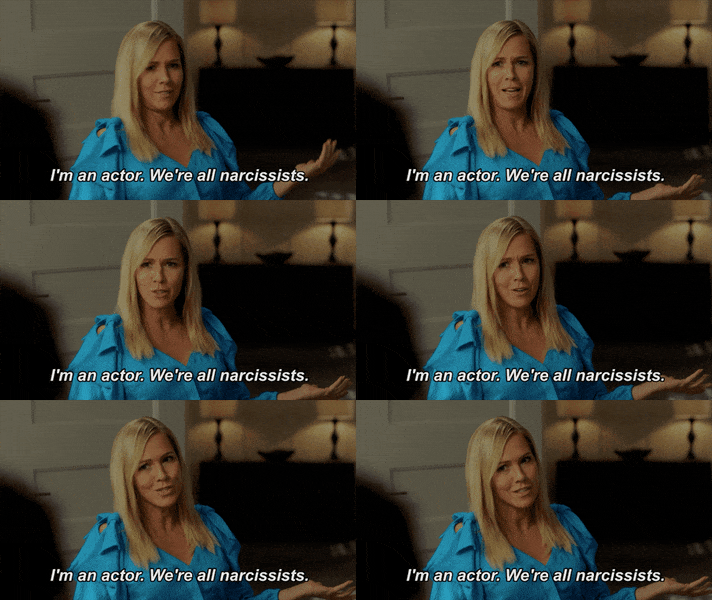
i knew it would be easy to bait you into a typical narcissistic response, you couldve ignored it & just kept lurking like you has been after announcing youre leaving forums l0l...
but you felt compelled to respond, bc i own you 👺


True or false? As a narcissist, I lie better than anyone else can.There are objective psychometric tests of narcissism like the Narcissistic Personality Inventory (NPI). We could all take that test and give the score here. Then we might have an objective measure of narcissism and conceit, provided we gave honest answers ; )