
You are using an out of date browser. It may not display this or other websites correctly.
You should upgrade or use an alternative browser.
You should upgrade or use an alternative browser.
Prayers For Israel
- Thread starter Soundz123
- Start date
- Status
- Not open for further replies.


.Princessa
LetYourSmileChangeTheWorldNotTheWorldChangeYourSmi

jungleboyx
New Member
All differences aside, let's please pray for Israel and what their people are going through right now.
i have to pray for your country for this ?
.Princessa
LetYourSmileChangeTheWorldNotTheWorldChangeYourSmi
@0EmmaUK0 You laughed at this with your emoji 🤣. NOT FUNNY!All differences aside, let's please pray for Israel and what their people are going through right now.
Well it's not funny to be honest. It's not funny when innocent people die. It's not a laughing matter it's truly sad.
jungleboyx
New Member
Thank god for chatgpt ,
The issue of Israeli settlements and the Israeli occupation of Palestinian territories has been a long-standing and contentious topic in international politics. Here is a brief overview:
The issue of Israeli settlements and the Israeli occupation of Palestinian territories has been a long-standing and contentious topic in international politics. Here is a brief overview:
British Mandate for Palestine:In the aftermath of World War I, the League of Nations granted Britain the mandate to administer the territory of Palestine, which at the time included what is now Israel, the West Bank, and Gaza Strip. This mandate lasted from 1920 to 1948.
Balfour Declaration:In 1917, the British government issued the Balfour Declaration, which expressed support for the establishment of a "national home for the Jewish people" in Palestine. This declaration has had a lasting impact on the Israeli-Palestinian conflict.
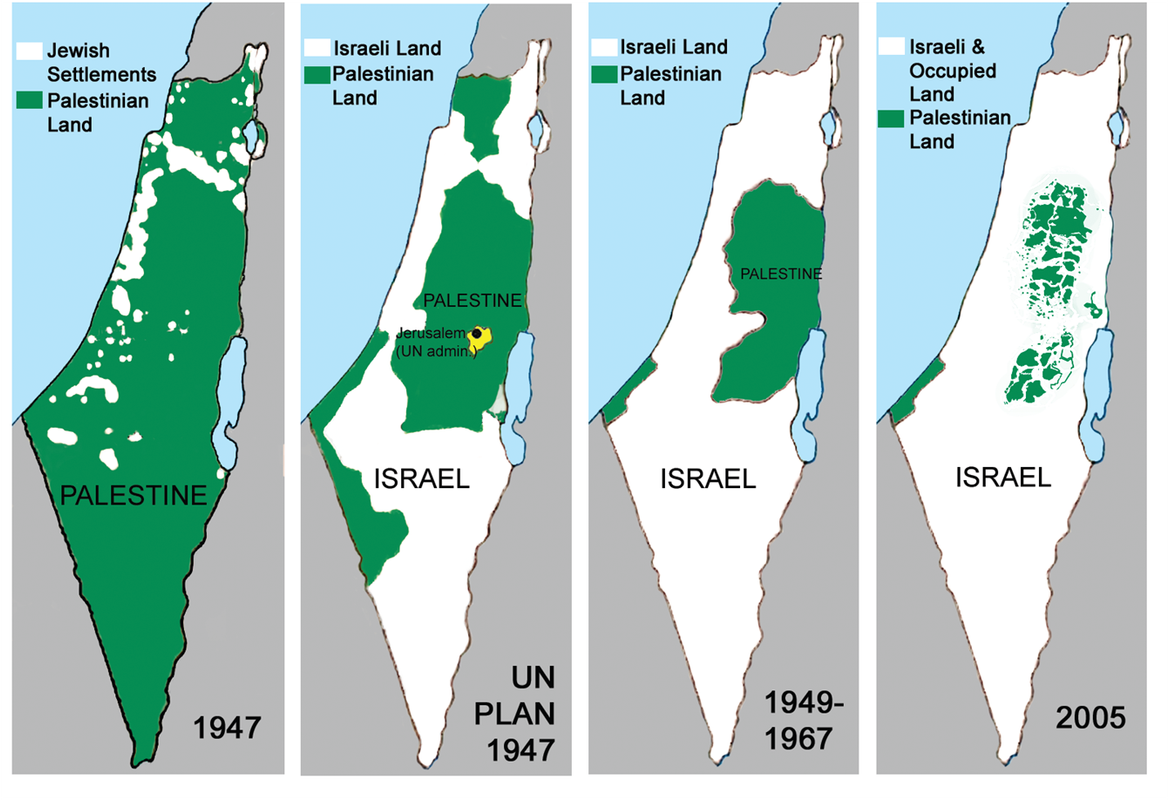
Partition Plan:In 1947, the United Nations proposed a partition plan that would have divided Palestine into separate Jewish and Arab states, with an international administration for Jerusalem. This plan was accepted by the Jewish leadership but rejected by Arab leaders. After the British mandate ended in 1948, Israel declared independence, leading to a war with its Arab neighbors.
Israeli Settlements:Israeli settlements are communities of Israeli citizens that have been established in territories that Israel captured during the 1967 Six-Day War, including the West Bank, East Jerusalem, and the Gaza Strip. The establishment and expansion of these settlements have been a major point of contention between Israelis and Palestinians.
Israeli Occupation:The Israeli occupation refers to Israel's control over these territories, which has been in place since 1967. The international community, including the United Nations, considers this occupation to be a violation of international law. The UN Security Council passed Resolution 242 and 338, calling for Israel to withdraw from the territories it occupied in 1967.
United Nations (UN) Position:The United Nations, through various resolutions, has consistently condemned Israeli settlements and the occupation. The UN Security Council, in particular, has passed numerous resolutions calling for a two-state solution, the establishment of a Palestinian state alongside Israel, and the end of the occupation.
Peace Process:The Israeli-Palestinian conflict has seen numerous attempts at a peace process, with negotiations focusing on issues such as the status of settlements, borders, the right of return for Palestinian refugees, security, and Jerusalem. The Oslo Accords in the 1990s marked a significant step toward a possible resolution, but the peace process has faced many obstacles and setbacks over the years.
Controversy and Disputes:The construction and expansion of Israeli settlements in the West Bank, in particular, have been a source of controversy and a major point of contention in negotiations. Many in the international community argue that these settlements hinder the prospects for a two-state solution, as they are often seen as encroachments on land that could be part of a future Palestinian state.
UK's Position:The United Kingdom has historically played a role in the Israeli-Palestinian conflict due to its historical connection with the region, including the Balfour Declaration. The UK has expressed support for a two-state solution and has criticized Israeli settlements. However, the specifics of its policies may have evolved over time and may differ based on the government in power.
.Princessa
LetYourSmileChangeTheWorldNotTheWorldChangeYourSmi
ALL the op wants is prayer. That's it! Just pray. 🙏
jungleboyx
New Member
No need to further elaborate the points chatgpt has already presented ...
A better idea is to re read the points chatgpt presented ...
Let me add this too here ,
The history of Jews in the region now known as Israel spans thousands of years. Jews have had a continuous presence in the land for centuries, dating back to ancient times. Some key points in the history of Jews in the region include:
Jews have maintained a presence in the region for centuries, and the establishment of the modern State of Israel in 1948 is a pivotal moment in Jewish and Israeli history. The return of Jews to Israel was a complex and multifaceted process that occurred over a long span of time.
The Balfour Declaration of 1917 was a statement by the British government expressing support for the establishment of a "national home for the Jewish people" in Palestine. After the Balfour Declaration, Jewish immigration to Palestine increased, leading to the growth of the Jewish population in the region.
Jews who settled in Palestine after the Balfour Declaration came from various places, including:
It's important to note that Jewish immigration to Palestine and the subsequent establishment of the State of Israel were significant and contentious historical events. The influx of Jewish immigrants played a pivotal role in the demographic changes and conflicts that shaped the region in the 20th century, leading to complex political and social dynamics.
Ancient Israel was located in the eastern part of the Mediterranean region, primarily in what is now modern-day Israel and Palestine. The historical boundaries and territorial extent of ancient Israel evolved over time, and it was the homeland of the Israelites, a group of Semitic people who played a significant role in the history of the region.
The core regions of ancient Israel included:
A better idea is to re read the points chatgpt presented ...
Let me add this too here ,
The history of Jews in the region now known as Israel spans thousands of years. Jews have had a continuous presence in the land for centuries, dating back to ancient times. Some key points in the history of Jews in the region include:
- Ancient Israel: Jews have a deep historical connection to the land of Israel, which dates back over 3,000 years. The biblical account describes the Jewish people's settlement in the land of Canaan, and this is a central theme in Jewish history and identity.
- Babylonian Exile: In the 6th century BCE, the Babylonians conquered the Kingdom of Judah, leading to the Babylonian Exile, during which many Jews were taken to Babylon. After the Babylonian Empire fell, some Jews returned to the land of Israel.
- Roman Period: The Romans conquered Jerusalem in 70 CE and destroyed the Second Temple. This event is often considered the beginning of the Jewish Diaspora, as many Jews were dispersed throughout the Roman Empire.
- Ottoman Empire: From the 16th to the early 20th century, the land of Israel was under Ottoman rule, and there was a Jewish presence in some of the cities and towns.
- Zionist Movement: In the late 19th and early 20th centuries, the Zionist movement emerged, which sought to establish a Jewish homeland in the land of Israel. This movement gained momentum over time.
- British Mandate for Palestine: After World War I, the League of Nations granted the United Kingdom a mandate to govern Palestine. During this period, Jewish immigration to the region increased.
- State of Israel: In 1947, the United Nations passed a resolution recommending the partition of Palestine into Jewish and Arab states. On May 14, 1948, David Ben-Gurion, the head of the Jewish Agency, declared the establishment of the State of Israel. This event marked the beginning of modern Israel.
Jews have maintained a presence in the region for centuries, and the establishment of the modern State of Israel in 1948 is a pivotal moment in Jewish and Israeli history. The return of Jews to Israel was a complex and multifaceted process that occurred over a long span of time.
The Balfour Declaration of 1917 was a statement by the British government expressing support for the establishment of a "national home for the Jewish people" in Palestine. After the Balfour Declaration, Jewish immigration to Palestine increased, leading to the growth of the Jewish population in the region.
Jews who settled in Palestine after the Balfour Declaration came from various places, including:
Europe: Many Jewish immigrants came from Eastern and Central Europe, where they were facing increasing persecution and anti-Semitism, particularly in the early 20th century. The aftermath of World War I and the collapse of empires, such as the Russian and Austro-Hungarian empires, led to greater migration.
Middle East and North Africa: Some Jews also migrated to Palestine from other countries in the Middle East and North Africa, driven by a variety of factors, including economic opportunities and the desire to live in the emerging Jewish homeland.
Diaspora: Jewish communities in the diaspora worldwide also supported the Zionist movement and contributed to the population growth in Palestine.
It's important to note that Jewish immigration to Palestine and the subsequent establishment of the State of Israel were significant and contentious historical events. The influx of Jewish immigrants played a pivotal role in the demographic changes and conflicts that shaped the region in the 20th century, leading to complex political and social dynamics.
Ancient Israel was located in the eastern part of the Mediterranean region, primarily in what is now modern-day Israel and Palestine. The historical boundaries and territorial extent of ancient Israel evolved over time, and it was the homeland of the Israelites, a group of Semitic people who played a significant role in the history of the region.
The core regions of ancient Israel included:
Canaan: The earliest settlements of the Israelites were in the region of Canaan, which encompassed parts of modern Israel, Palestine, Jordan, and Lebanon.
Kingdom of Israel and Kingdom of Judah: Ancient Israel eventually split into two separate kingdoms. The northern kingdom, known as the Kingdom of Israel, had its capital in Samaria. The southern kingdom, known as the Kingdom of Judah, had its capital in Jerusalem.
Judah and Jerusalem: Jerusalem, in particular, holds immense significance in the history of ancient Israel as it was the religious and political center, especially for the Kingdom of Judah. It is where the First and Second Temples were constructed.
Neighboring Regions: The influence of ancient Israel extended into neighboring regions, and conflicts and interactions with other nations, such as the Philistines, Assyrians, Babylonians, and Persians, played a crucial role in the history of the Israelites.
Last edited:
D
Deleted member 250213
Guest
I am praying for Hamas. Those rockets that will tear them a second arsehole will come sooner than later.
But seriously, I will be praying not for Israel, the IDF, Palestine or Hamas (despite my comment above). Instead I will be praying for the civilians from both sides who are caught up in this conflict.
But seriously, I will be praying not for Israel, the IDF, Palestine or Hamas (despite my comment above). Instead I will be praying for the civilians from both sides who are caught up in this conflict.
D
Deleted member 250213
Guest
I agree on this bit. As Confucius once said: "If you are going to plot revenge, dig two graves". In an ideal world, this would not happen. But welcome to humanity.Indeed. Atrocity does not excuse atrocity.
However Atrocity begats atrocity. Both sides have the put the guns away and talk. For Israel it is to stop the settlements and give the West Bank and Gaza Strip to the Palestinians. For Palestine, it will be like what the Irish had to contend with in 1919: Take what is given to you, and work upon it. It sucks, but they will have a homeland they can call their own.
If the Jews want to stay in the West Bank, they will have to become Jewish Palestinians and accept the laws of the land.
If the Palestinians want to return to their homes in Israel, they will have to accept that they are Israeli Palestinians.
But no more innocents on both sides dying, a high death toll is too much to bear.
A better idea is to re read the points chatgpt presented ...
Chatgpt can instead go make me a sandwich.

Lets add to the prayer that all war ends

babydolla
Gold Member
Lets add to the prayer that all war ends
i'm going to pray the war escalates,
💣
Not praying for a country that took over another country and killing, throwing out innocent people from their homes since 1947.
If Isr*el is throwing bombs (since 1947!) then it’s defending but if Hamas does is, then we know what the media calls it. They are the ones that are defending themselves.. SINCE 1947! It’s not a conflict, it’s genocide.
I will be praying for the civilians from both sides ofc! Palestine will be free one day!
If Isr*el is throwing bombs (since 1947!) then it’s defending but if Hamas does is, then we know what the media calls it. They are the ones that are defending themselves.. SINCE 1947! It’s not a conflict, it’s genocide.
I will be praying for the civilians from both sides ofc! Palestine will be free one day!
then i pray for your souli'm going to pray the war escalates,
💣

!tulsa!
Gold Member
With respect given to both sides (and their respective religions) God was what started the war in the first place. Stop being pawns and love your fellow human, regardless of his religion. **** politics and prayers. Be better and less violent humans (I know this is rich coming from an American, and maybe slightly utopian (( okay REALLY utopian )) but wake up. If your leaders lead you to violence, your leaders are **** humans.
DarthErica
Banned
I don’t believe you really mean that. You can’t pray that more innocent lives are taken. Children. So many innocent lives have been lost including children who have been butchered. You’re better than that. Don’t ask or pray for that to continue. There’s a lot of blame to go round, but don’t ask for more bloodshed. Just take a deep breath and a step back and think of all the innocent people who just want to live their lives and protect their families. Praying for escalation is the same as praying for their deaths. Don’t do that. Again, you’re better than that. I know our passion can lead us to say things.....lord knows I’m guilty of it. But please reconsider what you’re asking for. 😌i'm going to pray the war escalates,
💣
babydolla
Gold Member
I don’t believe you really mean that. You can’t pray that more innocent lives are taken. Children. So many innocent lives have been lost including children who have been butchered. You’re better than that. Don’t ask or pray for that to continue. There’s a lot of blame to go round, but don’t ask for more bloodshed. Just take a deep breath and a step back and think of all the innocent people who just want to live their lives and protect their families. Praying for escalation is the same as praying for their deaths. Don’t do that. Again, you’re better than that. I know our passion can lead us to say things.....lord knows I’m guilty of it. But please reconsider what you’re asking for. 😌
this is the opening act of the war mentioned in revelations, dont u see???
the creation of a purely jewish state in the holy land, the rising of the third temple of solomon & the end of days that follows…
the three kingdoms of the east (china), the north (russia), & the west (nato) will sleep walk into war & spread hellfire across the earth, babe….
clashing in the middle kingdom that is jerusalem, wat u see is the opening act of prophecy…
ive been telling u all that the world has already ended, youre all only just seeing it now bc the symptoms of the apocalypse are ever more apparent, but i’ve long known… my dolls confided this to me, & i can smell the mysticism & decay in the atmosphere…
no, im not crazy 🖕🏻

Elysian✨
☁️✨
It really saddens me that some people are actually that brainwashed thinking that Hamas's move was a form of terrorism, it was never a country for Israelis, Its called PALESTINE and not Israel.
Its been 60+ years since the Israelis started kicking People out of their homes, and its still happening till this day, at this moment of me typing this people in Hamas, Gaza, el Defa etc etc, are getting murdered, bombed, stabbed and the most important part of whats happening to them is that every Palestinian refugee, or even the people that still live in Palestine and didnt get thrown out of their OWN rightful Country that got killed are officially martyrs, and noone can take that away from them, Palestinian families from all over the world hearing that their families are dying, and cant do anything and even the Arab countries, traitors who gave up on a Country that they all once loved and sided with Israel and what they're doing.
And, the war that started, it was destined to happen, because all the Palestinians are just tired, tired and exhausted of all these years of humiliation, their women, children , men and families, getting humiliated Infront of the enemy, they're just tired of all of this massacre thats been going on for years and years, too many decades, too many deaths, and you know what the " Israelis " that people sided with did? Apart from everything, they removed twenty five families off of the city passports, there's no legacy in this family, its completely vanished off of the records and because of who? Because they decided to bomb buildings.
Gaza was a beautiful part of Palestine, and there are videos of it before what the enemy did, and now? Its completely gone, THERE'S NO green in it, its all ashes and black, nothing else. They're trying to remove Gaza off of the map, but they'll never succeed because it'll always stay in the people's hearts that are not actually brainwashed to think and believe that Palestinians are the energy.
It completely vanished*
Enemy*
Its been 60+ years since the Israelis started kicking People out of their homes, and its still happening till this day, at this moment of me typing this people in Hamas, Gaza, el Defa etc etc, are getting murdered, bombed, stabbed and the most important part of whats happening to them is that every Palestinian refugee, or even the people that still live in Palestine and didnt get thrown out of their OWN rightful Country that got killed are officially martyrs, and noone can take that away from them, Palestinian families from all over the world hearing that their families are dying, and cant do anything and even the Arab countries, traitors who gave up on a Country that they all once loved and sided with Israel and what they're doing.
And, the war that started, it was destined to happen, because all the Palestinians are just tired, tired and exhausted of all these years of humiliation, their women, children , men and families, getting humiliated Infront of the enemy, they're just tired of all of this massacre thats been going on for years and years, too many decades, too many deaths, and you know what the " Israelis " that people sided with did? Apart from everything, they removed twenty five families off of the city passports, there's no legacy in this family, its completely vanished off of the records and because of who? Because they decided to bomb buildings.
Gaza was a beautiful part of Palestine, and there are videos of it before what the enemy did, and now? Its completely gone, THERE'S NO green in it, its all ashes and black, nothing else. They're trying to remove Gaza off of the map, but they'll never succeed because it'll always stay in the people's hearts that are not actually brainwashed to think and believe that Palestinians are the energy.
There's no legacy in these families no more*It really saddens me that some people are actually that brainwashed thinking that Hamas's move was a form of terrorism, it was never a country for Israelis, Its called PALESTINE and not Israel.
Its been 60+ years since the Israelis started kicking People out of their homes, and its still happening till this day, at this moment of me typing this people in Hamas, Gaza, el Defa etc etc, are getting murdered, bombed, stabbed and the most important part of whats happening to them is that every Palestinian refugee, or even the people that still live in Palestine and didnt get thrown out of their OWN rightful Country that got killed are officially martyrs, and noone can take that away from them, Palestinian families from all over the world hearing that their families are dying, and cant do anything and even the Arab countries, traitors who gave up on a Country that they all once loved and sided with Israel and what they're doing.
And, the war that started, it was destined to happen, because all the Palestinians are just tired, tired and exhausted of all these years of humiliation, their women, children , men and families, getting humiliated Infront of the enemy, they're just tired of all of this massacre thats been going on for years and years, too many decades, too many deaths, and you know what the " Israelis " that people sided with did? Apart from everything, they removed twenty five families off of the city passports, there's no legacy in this family <---, its completely <- vanished off of the records and because of who? Because they decided to bomb buildings.
Gaza was a beautiful part of Palestine, and there are videos of it before what the enemy did, and now? Its completely gone, THERE'S NO green in it, its all ashes and black, nothing else. They're trying to remove Gaza off of the map, but they'll never succeed because it'll always stay in the people's hearts that are not actually brainwashed to think and believe that Palestinians are the energy. <--
It completely vanished*
Enemy*
babydolla
Gold Member
It really saddens me that some people are actually that brainwashed thinking that Hamas's move was a form of terrorism, it was never a country for Israelis, Its called PALESTINE and not Israel.
Its been 60+ years since the Israelis started kicking People out of their homes, and its still happening till this day, at this moment of me typing this people in Hamas, Gaza, el Defa etc etc, are getting murdered, bombed, stabbed and the most important part of whats happening to them is that every Palestinian refugee, or even the people that still live in Palestine and didnt get thrown out of their OWN rightful Country that got killed are officially martyrs, and noone can take that away from them, Palestinian families from all over the world hearing that their families are dying, and cant do anything and even the Arab countries, traitors who gave up on a Country that they all once loved and sided with Israel and what they're doing.
And, the war that started, it was destined to happen, because all the Palestinians are just tired, tired and exhausted of all these years of humiliation, their women, children , men and families, getting humiliated Infront of the enemy, they're just tired of all of this massacre thats been going on for years and years, too many decades, too many deaths, and you know what the " Israelis " that people sided with did? Apart from everything, they removed twenty five families off of the city passports, there's no legacy in this family, its completely vanished off of the records and because of who? Because they decided to bomb buildings.
Gaza was a beautiful part of Palestine, and there are videos of it before what the enemy did, and now? Its completely gone, THERE'S NO green in it, its all ashes and black, nothing else. They're trying to remove Gaza off of the map, but they'll never succeed because it'll always stay in the people's hearts that are not actually brainwashed to think and believe that Palestinians are the energy.
i guess you never heard of judea of rome, which is modern day israel established as land for the jews where they work as rome’s bankers in exchange rome defends judea from invaders…
it wasn’t until the fall of the byzantine empire thousands of years after judaism came to be, that the ottoman muslims conquered that land & coined it palestine…
the original 12 tribes of ISRAEL has its origins directly in Jerusalem & judaism predates Islam by at least 4 thousand years…
israel was always for the israeli jews, palestinians are the outsiders…
muslims has their holy land, & thats mecca in saudi arabia not fuckin’ JERUSALEM
Indeed, amazement at official international hypocrisy, racism, and double standards. That Western society steals a Palestinian homeland in which Jews, Muslims and Christians live in Syria before the year 1948 and then gives it to Zionist gangs like the terrorist Haganah gangs. Read about them.
the legalization of the terrorist occupation of Palestine is a war crime. If you want to confirm my words, look at the war in Ukraine.
In the case of Ukraine, you give weapons to the Ukrainian army to confront the Russian occupation, which you called a terrorist occupation
even though it does not target civilians and does not kill thousands of children under false and cowardly pretexts, such as self-defense, as the terrorist occupation army does in Palestine
but this is your position supporting the Ukrainian resistance against the Russian occupation, and this is It is a legitimate matter according to international law, and between fighting and killing the Palestinian resistance after portraying them as just pure terrorism with millions of Palestinian civilians with them, and standing with the occupier, this is not only against international law, but rather it is participation in war crimes.
The policies and propaganda that justify the occupation with flimsy arguments such as the presence of Jews for 3000 years are pure nonsense. Can someone apply to the Security Council to claim that he has the right, for example, to Belgium because he has ancestors who lived here 3000 years ago?? Of course not, and you know very well that it is only a weak justification for occupation and colonialism, as history will write
the legalization of the terrorist occupation of Palestine is a war crime. If you want to confirm my words, look at the war in Ukraine.
In the case of Ukraine, you give weapons to the Ukrainian army to confront the Russian occupation, which you called a terrorist occupation
even though it does not target civilians and does not kill thousands of children under false and cowardly pretexts, such as self-defense, as the terrorist occupation army does in Palestine
but this is your position supporting the Ukrainian resistance against the Russian occupation, and this is It is a legitimate matter according to international law, and between fighting and killing the Palestinian resistance after portraying them as just pure terrorism with millions of Palestinian civilians with them, and standing with the occupier, this is not only against international law, but rather it is participation in war crimes.
The policies and propaganda that justify the occupation with flimsy arguments such as the presence of Jews for 3000 years are pure nonsense. Can someone apply to the Security Council to claim that he has the right, for example, to Belgium because he has ancestors who lived here 3000 years ago?? Of course not, and you know very well that it is only a weak justification for occupation and colonialism, as history will write
Elysian✨
☁️✨
Believe whatever you want or like, but as much as you try to make other people believe and argue about it, one of the Israelis that lives outside of Jerusalem, got a viral video of him/her i dont remember exactly, and said that even in the Torah its says that the Israelis do NOT have a country, and if what your saying is TRUE ( which it is not ) noone is conforming that, not even the Israeli television, Israeli national people, came to Palestine and took it, each and every decade since 1948 Palestine has been getting worse and worse.i guess you never heard of judea of rome, which is modern day israel established as land for the jews where they work as rome’s bankers in exchange rome defends judea from invaders…
it wasn’t until the fall of the byzantine empire thousands of years after judaism came to be, that the ottoman muslims conquered that land & coined it palestine…
the original 12 tribes of ISRAEL has its origins directly in Jerusalem & judaism predates Islam by at least 4 thousand years…
israel was always for the israeli jews, palestinians are the outsiders…
muslims has their holy land, & thats mecca in saudi arabia not fuckin’ JERUSALEM
I know full well that the Zionist man in the West and the Zionist lobbies such as the terrorist AIPAC control the course of affairs in the West.
We saw support for Zionist terrorism in occupied Palestine from companies and restaurants such as McDonald's and others, against which the free peoples began a global boycott movement. I know that many of you would attack him or even affect your job or expel him if he admitted that what the occupying Zionist entity is doing in Palestine is crimes of genocide, ethnic cleansing, and collective punishment of civilians.
But when did this prevent a free person from standing by the truth? Are there no Western activists on Gaza now in solidarity with them? Indeed, it exists because they stand with the truth and do not fear the reaction of the Christian Zionist lobby. Because they know that these conditions are not permanent, like the fate of any occupation, and that history will record who was humane and who was less than animals and who supported genocide with foolish pretexts.
The Zionist entity that occupies the land of Palestine does not even represent the Jews who follow the Torah.
It is a secular Zionist entity that hates religious Jews and insults the Torah, so how can you claim that it is a national homeland for the Jews? Because it is a national homeland, they must occupy it and exterminate its inhabitants, as you did with the indigenous people of America, Canada, and Australia? Is this why you support the terrorist entity?
But sorry, believe me, that will not work because things are not as they were during the days of America’s colonization by the European colonialists.
The world is watching you now and seeing your crimes and terrorism on cameras.
There were no cameras when the American tribes, Apache and others, were exterminated...
Do you want me to explain to you ? ok without meaning to, you are either a supporter of Zionist terrorism on the basis of a war of religious ethnic cleansing
or a stupid person who believes everything that is said in the hypocritical Western media
or a supporter of Palestine, which resists a terrorist occupation, supported to the core by a hypocritical Christian West that claims human values that it does not believe in? He turns it into a weapon of distortion and demonization of the victim in a very despicable type of Nazi propaganda
Your absolute support for the occupying Zionist terrorism, without even paying attention to the suffering of a Palestinian people resisting a brutal occupation that was planted on their land, will be recorded in history.
The world is now gradually beginning to reject black propaganda about Muslims.
You wanted to use the Gaza war as an excuse to distort even more and demonize Muslims.
This is the core of the Nazi propaganda that Hitler used before carrying out the Holocaust, distorting the Jews to blame them for the problems of Germany and Europe.
Biden and Netanyahu used Nazi black propaganda in an attempt to demonize the Palestinians in preparation for carrying out the genocide that you now see on screens, which history will remember was carried out with your absolute support.
Biden said that he saw horrific pictures that he had never seen in his life, of 40 beheaded Israeli children killed by Hamas.
Then, hours later, the White House announced that the news was false and that there were no picturesfor any kids and biden didn't saw any proof ??
It became clear that this was just what the head of AIPAC, the Zionist terrorist lobby, said to old Biden, and there were no pictures of dead children without heads.
It became clear that the origin of the story and the rumor goes back to a Zionist soldier who belongs to an extremist right-wing Zionist group.
There were no Israeli women saying that Hamas them or that they were the families of the beheaded children????
where is your mind ?
So you are one of two.
A person was absent with misleading Nazi flags
Or just a terrorist who supports Zionist terrorism and believes that the Palestinians are not human or that their extermination is a good thing and pleases Christ.
This is of course a mistake because the Prophet Jesus and the Prophet Moses, may God bless them and grant them peace, did not succeed in exterminating people.
So, because you are basically a racist and a hater of Muslims. You hate the victim and will believe any nonsense that is said about them without evidence in an attempt to pretend that you are still human or that you are in the right moral position which u will be worng and in the worng side in history nomater what u says after .
We saw support for Zionist terrorism in occupied Palestine from companies and restaurants such as McDonald's and others, against which the free peoples began a global boycott movement. I know that many of you would attack him or even affect your job or expel him if he admitted that what the occupying Zionist entity is doing in Palestine is crimes of genocide, ethnic cleansing, and collective punishment of civilians.
But when did this prevent a free person from standing by the truth? Are there no Western activists on Gaza now in solidarity with them? Indeed, it exists because they stand with the truth and do not fear the reaction of the Christian Zionist lobby. Because they know that these conditions are not permanent, like the fate of any occupation, and that history will record who was humane and who was less than animals and who supported genocide with foolish pretexts.
The Zionist entity that occupies the land of Palestine does not even represent the Jews who follow the Torah.
It is a secular Zionist entity that hates religious Jews and insults the Torah, so how can you claim that it is a national homeland for the Jews? Because it is a national homeland, they must occupy it and exterminate its inhabitants, as you did with the indigenous people of America, Canada, and Australia? Is this why you support the terrorist entity?
But sorry, believe me, that will not work because things are not as they were during the days of America’s colonization by the European colonialists.
The world is watching you now and seeing your crimes and terrorism on cameras.
There were no cameras when the American tribes, Apache and others, were exterminated...
Do you want me to explain to you ? ok without meaning to, you are either a supporter of Zionist terrorism on the basis of a war of religious ethnic cleansing
or a stupid person who believes everything that is said in the hypocritical Western media
or a supporter of Palestine, which resists a terrorist occupation, supported to the core by a hypocritical Christian West that claims human values that it does not believe in? He turns it into a weapon of distortion and demonization of the victim in a very despicable type of Nazi propaganda
Your absolute support for the occupying Zionist terrorism, without even paying attention to the suffering of a Palestinian people resisting a brutal occupation that was planted on their land, will be recorded in history.
The world is now gradually beginning to reject black propaganda about Muslims.
You wanted to use the Gaza war as an excuse to distort even more and demonize Muslims.
This is the core of the Nazi propaganda that Hitler used before carrying out the Holocaust, distorting the Jews to blame them for the problems of Germany and Europe.
Biden and Netanyahu used Nazi black propaganda in an attempt to demonize the Palestinians in preparation for carrying out the genocide that you now see on screens, which history will remember was carried out with your absolute support.
Biden said that he saw horrific pictures that he had never seen in his life, of 40 beheaded Israeli children killed by Hamas.
Then, hours later, the White House announced that the news was false and that there were no picturesfor any kids and biden didn't saw any proof ??
It became clear that this was just what the head of AIPAC, the Zionist terrorist lobby, said to old Biden, and there were no pictures of dead children without heads.
It became clear that the origin of the story and the rumor goes back to a Zionist soldier who belongs to an extremist right-wing Zionist group.
There were no Israeli women saying that Hamas them or that they were the families of the beheaded children????
where is your mind ?
So you are one of two.
A person was absent with misleading Nazi flags
Or just a terrorist who supports Zionist terrorism and believes that the Palestinians are not human or that their extermination is a good thing and pleases Christ.
This is of course a mistake because the Prophet Jesus and the Prophet Moses, may God bless them and grant them peace, did not succeed in exterminating people.
So, because you are basically a racist and a hater of Muslims. You hate the victim and will believe any nonsense that is said about them without evidence in an attempt to pretend that you are still human or that you are in the right moral position which u will be worng and in the worng side in history nomater what u says after .
Last edited by a moderator:
DarthErica
Banned
I don’t think you’re crazy 🙂. Tho I do think we may be seeing the beginnings of WW3 sooner than later. I hope not thothis is the opening act of the war mentioned in revelations, dont u see???
the creation of a purely jewish state in the holy land, the rising of the third temple of solomon & the end of days that follows…
the three kingdoms of the east (china), the north (russia), & the west (nato) will sleep walk into war & spread hellfire across the earth, babe….
clashing in the middle kingdom that is jerusalem, wat u see is the opening act of prophecy…
ive been telling u all that the world has already ended, youre all only just seeing it now bc the symptoms of the apocalypse are ever more apparent, but i’ve long known… my dolls confided this to me, & i can smell the mysticism & decay in the atmosphere…
no, im not crazy 🖕🏻
You’re an atheist. Why would you care?I'm not praying for anything. I'm an atheist. I'm espousing the belief that Israel is reaping what it has sown. Israel is not synonymous with Judaism.
babydolla
Gold Member
I don’t think you’re crazy 🙂. Tho I do think we may be seeing the beginnings of WW3 sooner than later. I hope not tho
we are, this is the dawn of the apocalypse
it’s all been prophesied in just about every end time scenario, written in every religious text throughout history & every culture that has ever existed…
this isnt merely a biblical revelation, u can smell the decay & hear the trumpets in the air… could be the first, could be the last…
welcome to the age of aquarius, babe ♒️
Because atheism does not preclude ethicality? I'm a good person because I believe it is right to be, not because magic sky god man threatens me with eternal punishment if I am not.You’re an atheist. Why would you care?
D
Deleted member 250213
Guest
Don't try and conflate the Israel-Palestine conflict with the Russian-Ukrainian one. Those conflicts are vastly different and the outcome of the two outcomes will be vastly different.the legalization of the terrorist occupation of Palestine is a war crime. If you want to confirm my words, look at the war in Ukraine.
In the case of Ukraine, you give weapons to the Ukrainian army to confront the Russian occupation, which you called a terrorist occupation
even though it does not target civilians and does not kill thousands of children under false and cowardly pretexts, such as self-defense, as the terrorist occupation army does in Palestine
but this is your position supporting the Ukrainian resistance against the Russian occupation, and this is It is a legitimate matter according to international law, and between fighting and killing the Palestinian resistance after portraying them as just pure terrorism with millions of Palestinian civilians with them, and standing with the occupier, this is not only against international law, but rather it is participation in war crimes.
You want equivalenices try the Turkish-Cyprus conflict, where the Turks invaded half the island, expelled the Greeks and then transplanted Turkish citizens to bolster the number of "cirizens" in the area. Sounds like Israel 2.0 to me.
DarthErica
Banned
Let’s hope we’re both wrong. I hope so. You’re young, I’m young, we both have long lives ahead of us hopefully. I’m hoping for at least another 60 years in this life and more for you. Don’t give up hope. Without hope there’s nothing. Peace and the future is built on hope. 😊we are, this is the dawn of the apocalypse
it’s all been prophesied in just about every end time scenario, written in every religious text throughout history & every culture that has ever existed…
this isnt merely a biblical revelation, u can smell the decay & hear the trumpets in the air… could be the first, could be the last…
welcome to the age of aquarius, babe ♒️


ㅤㅤㅤㅤㅤㅤ
New Member
WW3 would be the best thing to happen anyway. I hope it happens tbh.I do think we may be seeing the beginnings of WW3 sooner than later. I hope not tho
!tulsa!
Gold Member
Anyone who hopes for war has not seen war first hand and has literally no understanding of violence first hand. Just saying. People who talk about violence as if it’s something to aspire to or be hyped about only acts that way until they meet it in person. And then they wish that it had never happened to them. .
ㅤㅤㅤㅤㅤㅤ
New Member
I understand violence. I have witnessed 2 wars first hand. don't talk about me if you don't even know me.Anyone who hopes for war has not seen war first hand and has literally no understanding of violence first hand. Just saying. People who talk about violence as if it’s something to aspire to or be hyped about only acts that way until they meet it in person. And then they wish that it had never happened to them. .
!tulsa!
Gold Member
Alright. Pony up. Which two wars ?I understand violence. I have witnessed 2 wars first hand. don't talk about me if you don't even know me.
And. You’ve witnessed ? ExplainI understand violence. I have witnessed 2 wars first hand. don't talk about me if you don't even know me.
DarthErica
Banned
Why the phuck would you actually hope for a world war? Have you learned nothing from history? Your ignorance blinds youWW3 would be the best thing to happen anyway. I hope it happens tbh.
ㅤㅤㅤㅤㅤㅤ
New Member
I witnessed my father, sister, brothers and most of my family get blown up, shot by Americans. innocent people getting killed for nothing. I want to see America fall at its knees for killing my family, many other people in all countries. that is why I hope for WW3, I hope America gets a taste of its own medicine and gets destroyed.And. You’ve witnessed ? Explain
DarthErica
Banned
In what war? What conflict?I witnessed my father, sister, brothers and most of my family get blown up, shot by Americans. innocent people getting killed for nothing. I want to see America fall at its knees for killing my family, many other people in all countries. that is why I hope for WW3, I hope America gets a taste of its own medicine and gets destroyed.
.Princessa
LetYourSmileChangeTheWorldNotTheWorldChangeYourSmi
I'm American. I'm so proud to be an American. I love my country. Haters gonna hate. America is one of the best countries in the world. Amen! Don't mess with Americans. Don't mess with America. Don't mess with the world. 🌎🌍 God bless America! God bless the world. 🌍🌎
Sorry about your loss. Two wrongs don't make a right. That's not nice to say about America. Not all Americans are bad. Take that back. You hope America gets destroyed well I hope you get Jesus in your life. America will never get destroyed. We will win all the time. We will stand up and we will rise up. We kneel to the Cross and stand for our America flag. Let me annoy you now cuz I have nothing else to say to you since you hate America so bad and plus you said you want my country America destroyed. That's not nice to say. That's mean.
No to war.
Peace in this world 🙏 blessings to you.
Sorry about your loss. Two wrongs don't make a right. That's not nice to say about America. Not all Americans are bad. Take that back. You hope America gets destroyed well I hope you get Jesus in your life. America will never get destroyed. We will win all the time. We will stand up and we will rise up. We kneel to the Cross and stand for our America flag. Let me annoy you now cuz I have nothing else to say to you since you hate America so bad and plus you said you want my country America destroyed. That's not nice to say. That's mean.
No to war.
Peace in this world 🙏 blessings to you.
I witnessed my father, sister, brothers and most of my family get blown up, shot by Americans. innocent people getting killed for nothing. I want to see America fall at its knees for killing my family, many other people in all countries. that is why I hope for WW3, I hope America gets a taste of its own medicine and gets destroyed.
!tulsa!
Gold Member
My heart hurts for and with you. You’ve really just proven my point though. The average person is not a war monger. And. As an American, I can honestly say that I had no say in the violence visited on your family, nor would I have condoned it if I did. . Can’t really say that I would have felt any different than you if I had been visited by such violence… my point is that senseless violence is something that humans need to steer clear of, collectively, and that the vast majority of violence is senseless..I witnessed my father, sister, brothers and most of my family get blown up, shot by Americans. innocent people getting killed for nothing. I want to see America fall at its knees for killing my family, many other people in all countries. that is why I hope for WW3, I hope America gets a taste of its own medicine and gets destroyed.
ㅤㅤㅤㅤㅤㅤ
New Member
I agree, don't blame Americans, people like you are fine. it's the soldiers, generals in the war, the corrupt and bad ones of any country. they should all pay for their devastation, with either their life or life in prison.My heart hurts for and with you. You’ve really just proven my point though. The average person is not a war monger. And. As an American, I can honestly say that I had no say in the violence visited on your family, nor would I have condoned it if I did. . Can’t really say that I would have felt any different than you if I had been visited by such violence… my point is that senseless violence is something that humans need to steer clear of, collectively, and that the vast majority of violence is senseless..
O....k........this is the opening act of the war mentioned in revelations, dont u see???
the creation of a purely jewish state in the holy land, the rising of the third temple of solomon & the end of days that follows…
the three kingdoms of the east (china), the north (russia), & the west (nato) will sleep walk into war & spread hellfire across the earth, babe….
clashing in the middle kingdom that is jerusalem, wat u see is the opening act of prophecy…
ive been telling u all that the world has already ended, youre all only just seeing it now bc the symptoms of the apocalypse are ever more apparent, but i’ve long known… my dolls confided this to me, & i can smell the mysticism & decay in the atmosphere…
no, im not crazy 🖕🏻
We only get strongerI witnessed my father, sister, brothers and most of my family get blown up, shot by Americans. innocent people getting killed for nothing. I want to see America fall at its knees for killing my family, many other people in all countries. that is why I hope for WW3, I hope America gets a taste of its own medicine and gets destroyed.

Rachel_NY
Active Member
I guess you did not hear about Hamas launched 5000 missiles into Israel on October 7th, and they were in Israel beheading babies and raping women and girls and burning them alive that day as well. I guess that is not terrorism to you.It really saddens me that some people are actually that brainwashed thinking that Hamas's move was a form of terrorism, it was never a country for Israelis, Its called PALESTINE and not Israel.
Its been 60+ years since the Israelis started kicking People out of their homes, and its still happening till this day, at this moment of me typing this people in Hamas, Gaza, el Defa etc etc, are getting murdered, bombed, stabbed and the most important part of whats happening to them is that every Palestinian refugee, or even the people that still live in Palestine and didnt get thrown out of their OWN rightful Country that got killed are officially martyrs, and noone can take that away from them, Palestinian families from all over the world hearing that their families are dying, and cant do anything and even the Arab countries, traitors who gave up on a Country that they all once loved and sided with Israel and what they're doing.
And, the war that started, it was destined to happen, because all the Palestinians are just tired, tired and exhausted of all these years of humiliation, their women, children , men and families, getting humiliated Infront of the enemy, they're just tired of all of this massacre thats been going on for years and years, too many decades, too many deaths, and you know what the " Israelis " that people sided with did? Apart from everything, they removed twenty five families off of the city passports, there's no legacy in this family, its completely vanished off of the records and because of who? Because they decided to bomb buildings.
Gaza was a beautiful part of Palestine, and there are videos of it before what the enemy did, and now? Its completely gone, THERE'S NO green in it, its all ashes and black, nothing else. They're trying to remove Gaza off of the map, but they'll never succeed because it'll always stay in the people's hearts that are not actually brainwashed to think and believe that Palestinians are the energy.
There's no legacy in these families no more*
It completely vanished*
Enemy*
By another Moderator no less tooCan a forum moderator lock this thread? Wasn't meant to be a debate or argument thread, but terrorist sympathizers had to come and stink this thread up. It's long been derailed.

OriginalScreenName
Silver Member
Israel is not the problem and never was, the problem has always been Hamas. Not the people of Palestine, going back to old maps or timelines and saying dur we were here first, means jack ****. If it meant anything, then everyone on the planet needs to respectively go back to their country of origin. If one wants to be as stupid as possible.
All the bloodshed in Israel and Palestine right now is completely on the hands of Hamas. And Hamas is nothing short of a true neo nazi regime.
Hopefully, when Hamas is completely destroyed, Israel will leave Palestine alone, but it all just depends on how the people of Palestine react. If they continue to spew the hate that Hamas taught them, they may just lose everything.
Either way, Israel has every right to defend itself from Hamas and any other country that wants to destroy it.
And it would do peaceful Muslims in America good to show that Hamas and other terrorist groups that claim to be Muslim, do not represent Islam, they should be coming out in force just has the pro-hamas people have.
All the bloodshed in Israel and Palestine right now is completely on the hands of Hamas. And Hamas is nothing short of a true neo nazi regime.
Hopefully, when Hamas is completely destroyed, Israel will leave Palestine alone, but it all just depends on how the people of Palestine react. If they continue to spew the hate that Hamas taught them, they may just lose everything.
Either way, Israel has every right to defend itself from Hamas and any other country that wants to destroy it.
And it would do peaceful Muslims in America good to show that Hamas and other terrorist groups that claim to be Muslim, do not represent Islam, they should be coming out in force just has the pro-hamas people have.
babydolla
Gold Member
Israel is not the problem and never was, the problem has always been Hamas. Not the people of Palestine, going back to old maps or timelines and saying dur we were here first, means jack ****. If it meant anything, then everyone on the planet needs to respectively go back to their country of origin. If one wants to be as stupid as possible.
All the bloodshed in Israel and Palestine right now is completely on the hands of Hamas. And Hamas is nothing short of a true neo nazi regime.
Hopefully, when Hamas is completely destroyed, Israel will leave Palestine alone, but it all just depends on how the people of Palestine react. If they continue to spew the hate that Hamas taught them, they may just lose everything.
Either way, Israel has every right to defend itself from Hamas and any other country that wants to destroy it.
And it would do peaceful Muslims in America good to show that Hamas and other terrorist groups that claim to be Muslim, do not represent Islam, they should be coming out in force just has the pro-hamas people have.
there wont be a palestine after this,
hamas ruined that for them, israel is going to now seige the entirety of gaza & the west bank
promises
OriginalScreenName
Silver Member
I suspect that as well, but the optimal outcome would be that Israel lets Palestine remain, but I think things are way past the point of no return, and the good people of Palestine have no one to blame but Hamas and those who supported Hamas.there wont be a palestine after this,
hamas ruined that for them, israel is going to now seige the entirety of gaza & the west bank
promises
jungleboyx
New Member
Lots of antisemitic rhetoric in this thread. Uncalled for.
A Semitic religion is a term used to describe a group of religions that originated in the Semitic-speaking regions of the ancient Near East. The Semitic-speaking peoples are those who spoke Semitic languages, a language family that includes languages like Hebrew, Aramaic, Arabic, and Akkadian, among others. Semitic religions are characterized by their common linguistic and cultural heritage.
The most well-known Semitic religions include:
Judaism: Judaism is one of the world's oldest monotheistic religions and is primarily associated with the Hebrew people. It is based on the sacred texts of the Torah and the Talmud and centers around the worship of one God, Yahweh. The Western Wall in Jerusalem is one of its most sacred sites.
Christianity: Christianity evolved from Judaism and is centered around the life and teachings of Jesus Christ. It is a monotheistic religion that believes in the Holy Trinity (Father, Son, and Holy Spirit). The Bible, including the Old and New Testaments, is its sacred text.
Islam: Islam emerged in the Arabian Peninsula in the 7th century CE, and it is based on the teachings of the Prophet Muhammad as recorded in the Quran. It is a monotheistic religion that emphasizes submission to the will of Allah (God) and has various branches and sects, with Sunni and Shia being the two largest.
That was all new to me 🙂
babydolla
Gold Member
I suspect that as well, but the optimal outcome would be that Israel lets Palestine remain, but I think things are way past the point of no return, and the good people of Palestine have no one to blame but Hamas and those who supported Hamas.
get ready for the first jewish state, & the coming symptoms of the apocalypse ✌🏻
OriginalScreenName
Silver Member
get ready for the first jewish state, & the coming symptoms of the apocalypse ✌🏻
I really have no problem with either.
--------------------------------------------------
I really already thought of Israel as a " Jewish State " so. shrugs.... Also, I guess if people want to be religious nit-picky, one can say Rome is a Catholic State. tell that to die-hard Catholics most of them will **** themselves and say no no we are just a free-flowing religion and it is like no no, you have a monarchy that most all of Europe recognizes as a Monarchy and your religion is catholicism so ipsofacto, you have a Catholic State.
In the end, it is all fucking bullshit.
History is literally repeating itself, with WWII and Germany, Hitler was out of his gourd and racist and promoted a superior race bleh bleh bleh, now this is basically Nazism rebooted the twist being Muslim Extremists under a new name, Hamas /ISIS are cut from the same cloth of hate, intolerance, and some boner to exterminate the Jewish people.
And the most brain-damaging part of it all is; let's pretend that the Jewish people in general, and Israel, the government of Israel, etc,
if they really were " evil " and a " threat " to the world, wouldn't it reason for anyone with an iota of common sense; ( which is rhetorical because anti-semites and Muslim extremists do not have common sense or morals.) that there would be historical undeniable proof like there has been for any major war or conflict on the globe. An that in turn the free countries of the world would have done something to any degree to stop an evil empire.
Now some moron is going to go to the international court and say look look there are lawsuits filed against Israel, slow claps, congrats, guess what Sherlock, that is what a civilized society that follows laws, is supposed to do, leave it to a court system to decide who is at fault when a crime occurs and not give in to allegations off the cuff and just brainlessly condemn people based on an allegation.
What is sad, is that there are good Muslims in the world that are not speaking up and against the extremists in their own religion and in force. The only thing I can think of as to why is they are afraid to.
Again it is all fucking pointless, no one learns from history, if they did, the world wouldn't be in the **** it is now. And then guess what, in the end everyone dies. You know what would be hella fun, is if as a nation, we could for a while, racially profile or discriminate against those supporting Hamas in America, scoop them up, not hurt them, just detain them, and deport them straight to Iran, not even land in Iran, just fly over, and parachute them all into Iran and be like **** you Iran.
Also let's do away with the TSA and just profile and discriminate against anyone coming from or going to countries that are not friendly to the USA and the free world in general, which would be NK, Russia, China, Iran, Afghanistan, Pakistan, whatever other **** stains are out there in the Middle East that want America to be destroyed.
I want an airline, where I can smoke on the plane ( and i dont even smoke ) drink, etc, with nice big ass seats and leg room, and you have to dress like it is the 1940s. More over, everyone on the plane is given a fully loaded gun, even children. one person acts out, then it is a free for all. I hate flying. and Besides Babydolla, and a few other people on this **** hole website, the rest of you can **** yourselves till you go cross eyed and pass out from punching each other in the face while laughing.
.Princessa
LetYourSmileChangeTheWorldNotTheWorldChangeYourSmi
OriginalScreenName
Silver Member
Ya notice the " terrorist " sympathizers, are full of ****, there isn't any need to close the thread. They are nothing but cowards, bigots, hatemongers, and Muslim extremists. No need to run from them, there are more good people with common sense in the free world than there are of them. Let them run their mouths and run the risk of being tracked by agencies out in the world who end up putting people like them, on a terrorist watch list. Everyone with even one brain cell of common sense in them, needs to put these disgusting people in their place and call them out wherever they are. And if it is in public, easy way to dox em, stay low key, get your phone out record em, follow em back from a safe distance to their car, and boom now you got their plates. blast em on social media.
if ya cant, do what ya can in your local areas to put em out in the public, shame em to no end. They have the right to speak their mind, but the free world doesn't have to agree with their cowardliness, bigotry, and hatemongering religious views.
ya see em on social media, report em properly.
that is if it really bothers anyone.
if not, then why even be in the discussion, which is rhetorical, people love to run their mouths online and do nothing.
if ya cant, do what ya can in your local areas to put em out in the public, shame em to no end. They have the right to speak their mind, but the free world doesn't have to agree with their cowardliness, bigotry, and hatemongering religious views.
ya see em on social media, report em properly.
that is if it really bothers anyone.
if not, then why even be in the discussion, which is rhetorical, people love to run their mouths online and do nothing.
- Status
- Not open for further replies.